
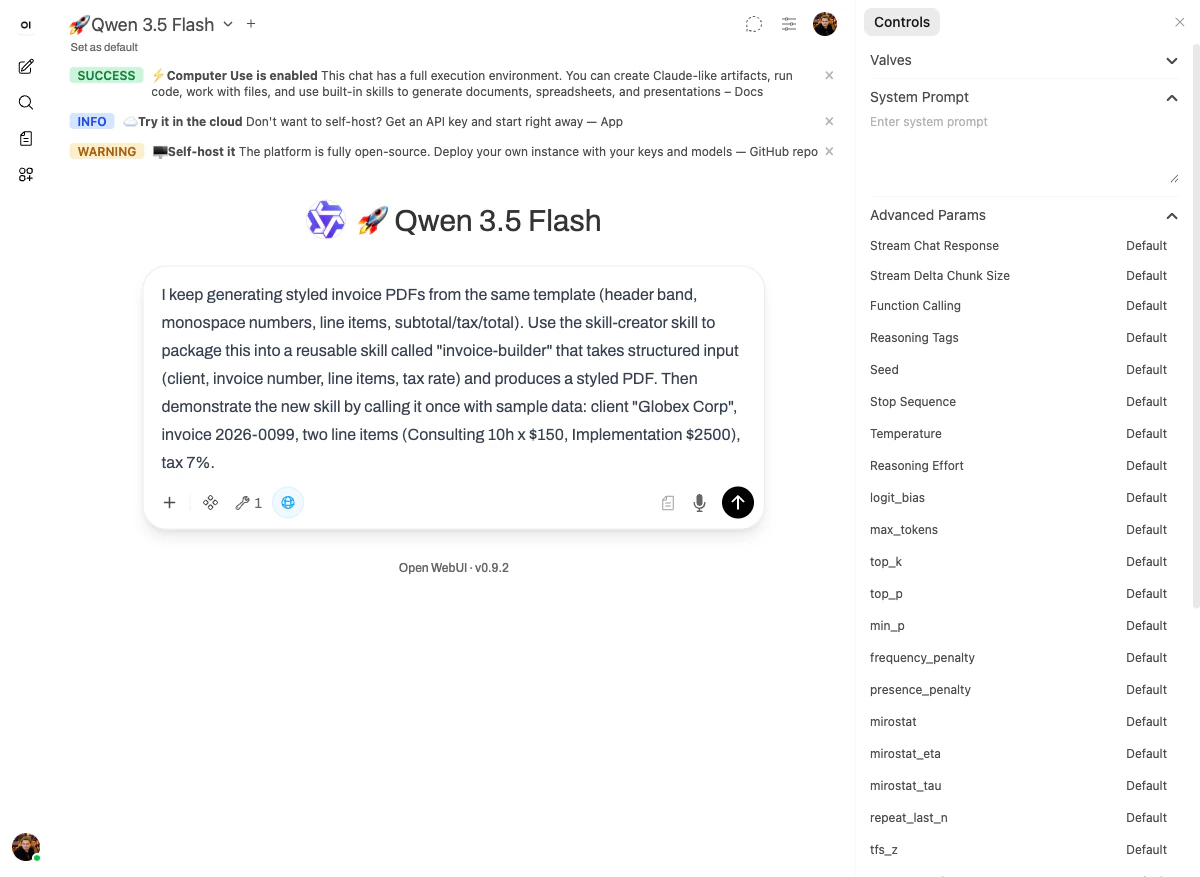
/skill-creator does. It takes a recurring prompt and turns it into a named, parameterized skill the model can call by name forever after — same input shape, same output shape, no prompt engineering required.
The prompt
What happened
Theskill-creator skill is itself a skill. Its job is to walk the model through producing a well-formed skill folder: SKILL.md describing capabilities, scripts implementing the work, an __init__.py so the skill is callable.
On this run, you can see the model building a tool, then using the tool it just built:
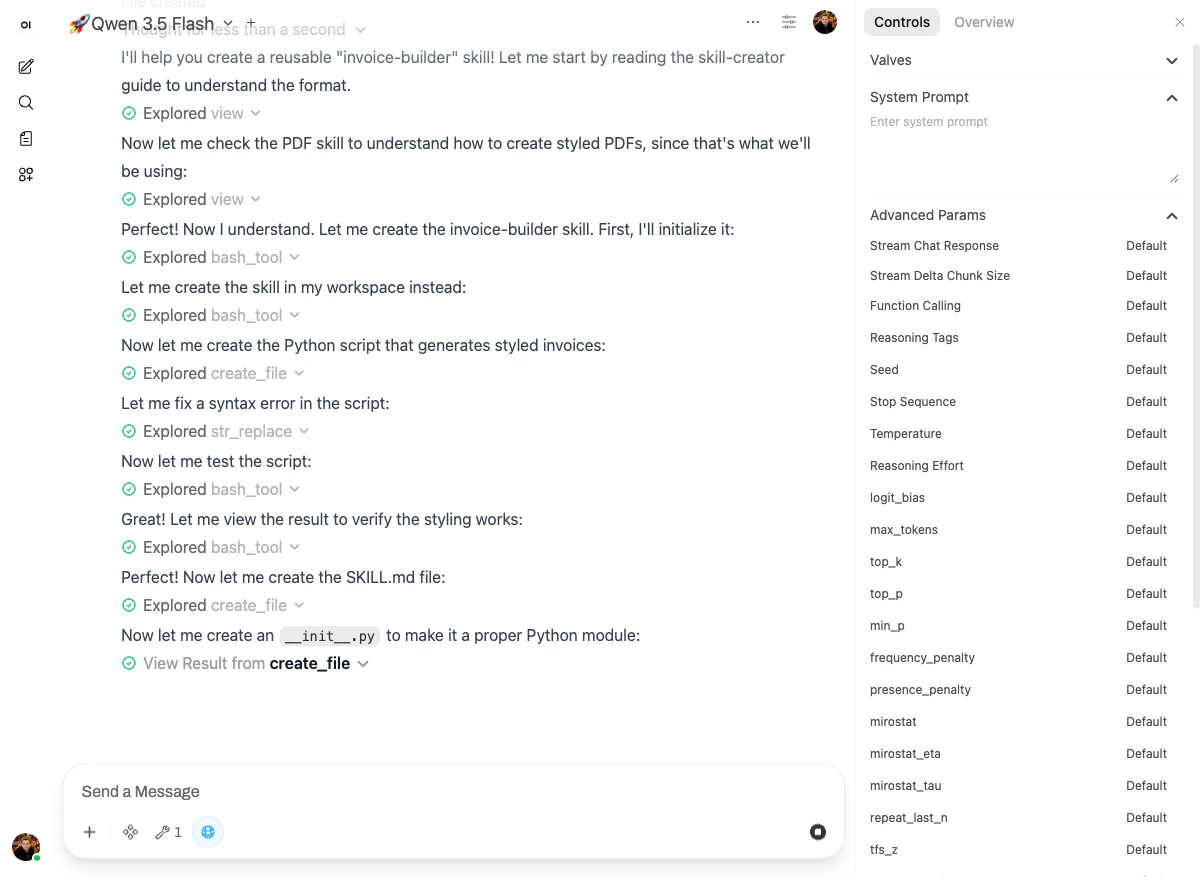
Explored view— read theskill-creatorguide to understand the format.Explored view— read thepdfskill for reference, since that’s whatinvoice-builderwill use under the hood.Explored bash_tool— initialized the new skill.Explored bash_tool— created the skill in the workspace.Explored create_file— wrote the Python script that generates styled invoices.Explored str_replace— fixed a syntax error live.Explored bash_tool— tested the script.Explored bash_tool— viewed the result to verify the styling.Explored create_file— createdSKILL.md.View Result from create_file— created__init__.pyto make it a proper Python module.
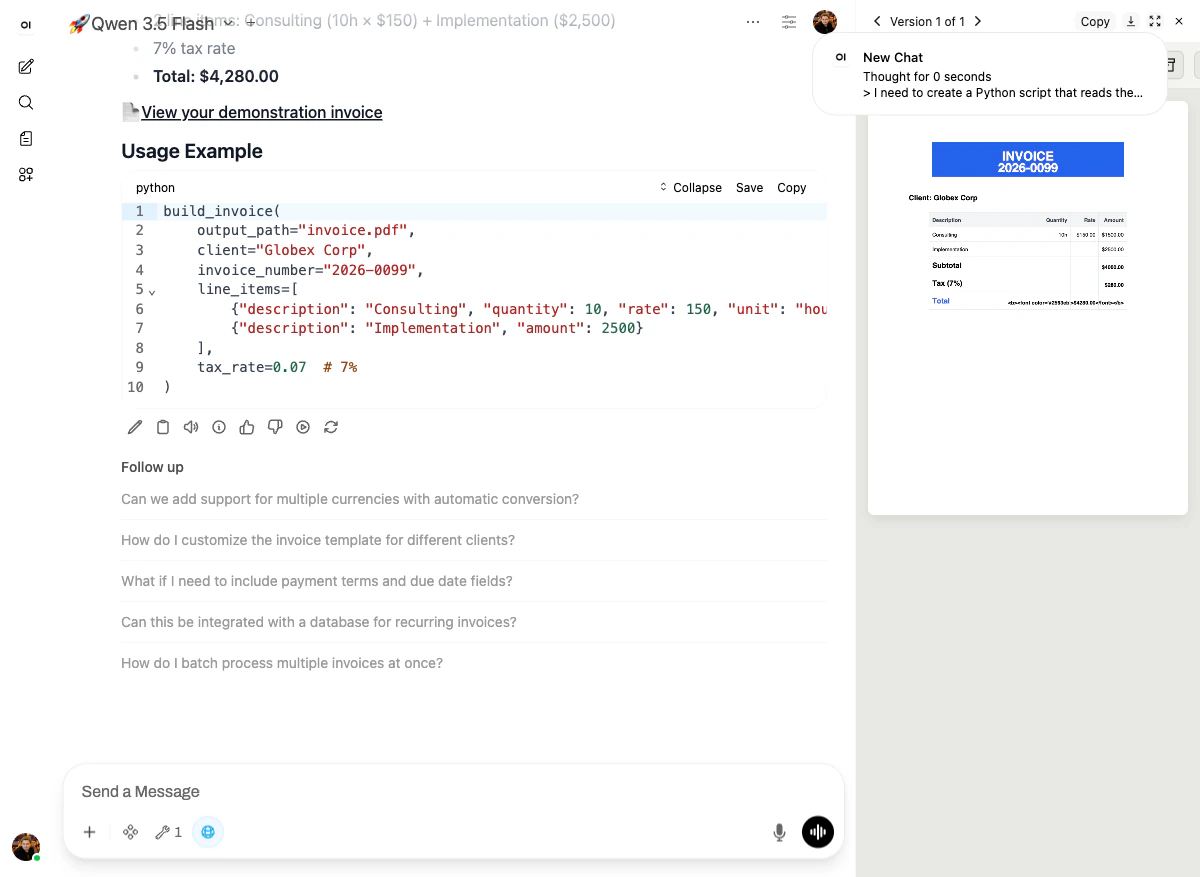
The output
What just happened (the leverage)
Compare the two prompts side by side: Before (scenario 4):Generate a styled invoice as a PDF for a freelance design studio called “Northwind Studio”. Bill to: Acme Corp, 123 Main St, San Francisco, CA. Invoice #2026-0042, dated 2026-04-26, due 2026-05-26. Line items: Logo redesign ($2,400), Brand guidelines doc ($1,200), 3 x landing page mockup ($800 each), Asset handoff & support ($600). Subtotal, 8.5% tax, and total. Use a clean modern layout with the studio name in a colored header band, monospace numbers, and a thin accent line. Use the pdf skill.That’s 73 words and a careful structure that has to be re-typed (or copy-pasted and edited) every time. After:
Use invoice-builder for Globex Corp, invoice 2026-0099, line items …, tax 7%.That’s a parameter list. It’s also deterministic — the design system, the layout, the math, the styling are all baked into the skill. The model isn’t free-styling them anymore. That gap is the entire point of the platform. The user starts by chatting; the user ends by shipping skills.
Why it works
Theskill-creator skill is itself an example of the same idea applied recursively: the work of “writing a skill correctly” used to be a long, careful prompt; now it’s a one-shot call to skill-creator. Every skill on the platform was built this way at some point — with a person staring at a prompt they had typed three times and asking “could this just be a function?”
That’s the whole arc. Crawl (one-off prompts) → walk (the model uses live tools and sub-agents) → run (the user packages their own skills).
Next: What’s next → — your skills become callable building blocks for n8n, CI, and any tool that can hit an HTTP endpoint.